Glyn
GlynIn March 1740 a small boat came ashore at Benidorm with nobody aboard.
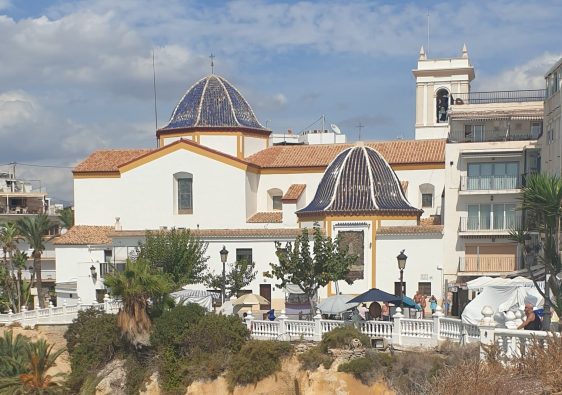
The villagers, afraid the crew had died of plague, did the sensible thing and burned it on the beach. When the fire went out, children picking through the ashes found an image of the Virgin with the child in her arms, sitting in what had been the stern, entirely undamaged.
That was taken as a miracle, and it is the reason this town has a patron. She is the Mare de Déu del Sofratge, the Virgen del Sufragio, and along with Sant Jaume she is who the Festes Majors Patronals are for.
In 2026 they run Friday 6 to Wednesday 11 November.
Why this is the week to come
Every other fiesta in the Benidorm calendar has been quietly funding this one. The Marathon of the Euro in September, the verbenas through the summer, the association dinners: the money goes here. This is the town’s own week, and it is the one that visitors almost never see because it falls after the season has closed.
That is precisely the argument for coming. Flights and hotels are at their cheapest, the weather in early November is usually better than anyone in Britain expects, and the town is doing the single thing it does entirely for itself.
The finding, re-staged on Poniente
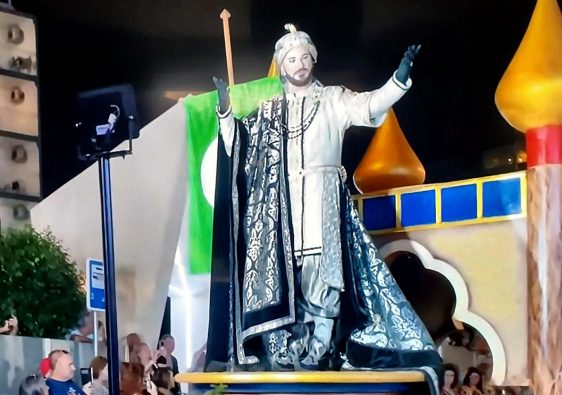
The centrepiece is the escenificación del hallazgo: the finding of the Virgin, acted out on Poniente beach on the Saturday afternoon, followed by salvos fired in her honour.
They have been staging it since 1971, so it is not an old tradition in itself, but it is a serious one, and it is the most Benidorm thing you will ever watch. A beach that spends ten months of the year covered in sunloungers, being used to re-enact a 285-year-old story about a burnt boat.
The finding itself is commemorated separately on 16 March, the actual anniversary. November is when it is performed.
How the week runs
The shape below is the 2024 official programme. The days and the running order are consistent year to year, but the 2026 programme was not published when we wrote this, so treat the times as indicative and check before you plan around any single act.
Friday opens it. The artistic lighting goes on in Martínez Alejos in the early evening, the fairground opens by the bullring, and late on comes the Entrada de Peñas, the peñas parading through Ruzafa and Martínez Alejos. This is the loud, young, slightly chaotic one.
Saturday is the big day. Mass at San Jaime and Santa Ana in the morning, then bells and an aerial bombardment at noon, the bands parading into the Plaça SSMM Reyes de España to play “Festa en Benidorm”. The re-enactment on Poniente is late afternoon, followed by the romería through the town, the flower offering at the church and the official proclamation. Music goes on well past midnight.
Sunday and Monday are the two patronal days, one for the Virgin and one for Sant Jaume. Each follows the same pattern: bombardment at eight in the morning, a mascletà at two in the afternoon, and the procession in the evening.
Tuesday is for the town’s dead, with a requiem mass in the morning, and then turns comic in the evening with the Desfile del Humor, the peñas’ humour parade, and a mascletà after dark.
Wednesday closes it: a children’s mascletà with sweets thrown, a float parade in the late afternoon and fireworks to finish.
Expect local public holidays in the middle of it, so banks and offices will shut.
A warning about the mascletà
If you have not experienced one, a mascletà is not a firework display. It happens in daylight and it is made entirely of noise: several minutes of coordinated explosions building to something you feel through the pavement and in your chest.
British visitors routinely misunderstand this and stand too close, or bring a dog, or wonder why everyone else is holding their mouth slightly open. Do that last one. It equalises the pressure and it is what the locals are doing.
The day after: fancy dress
The Patronals are the week visitors almost never see. The day after them is the one they fly in for.
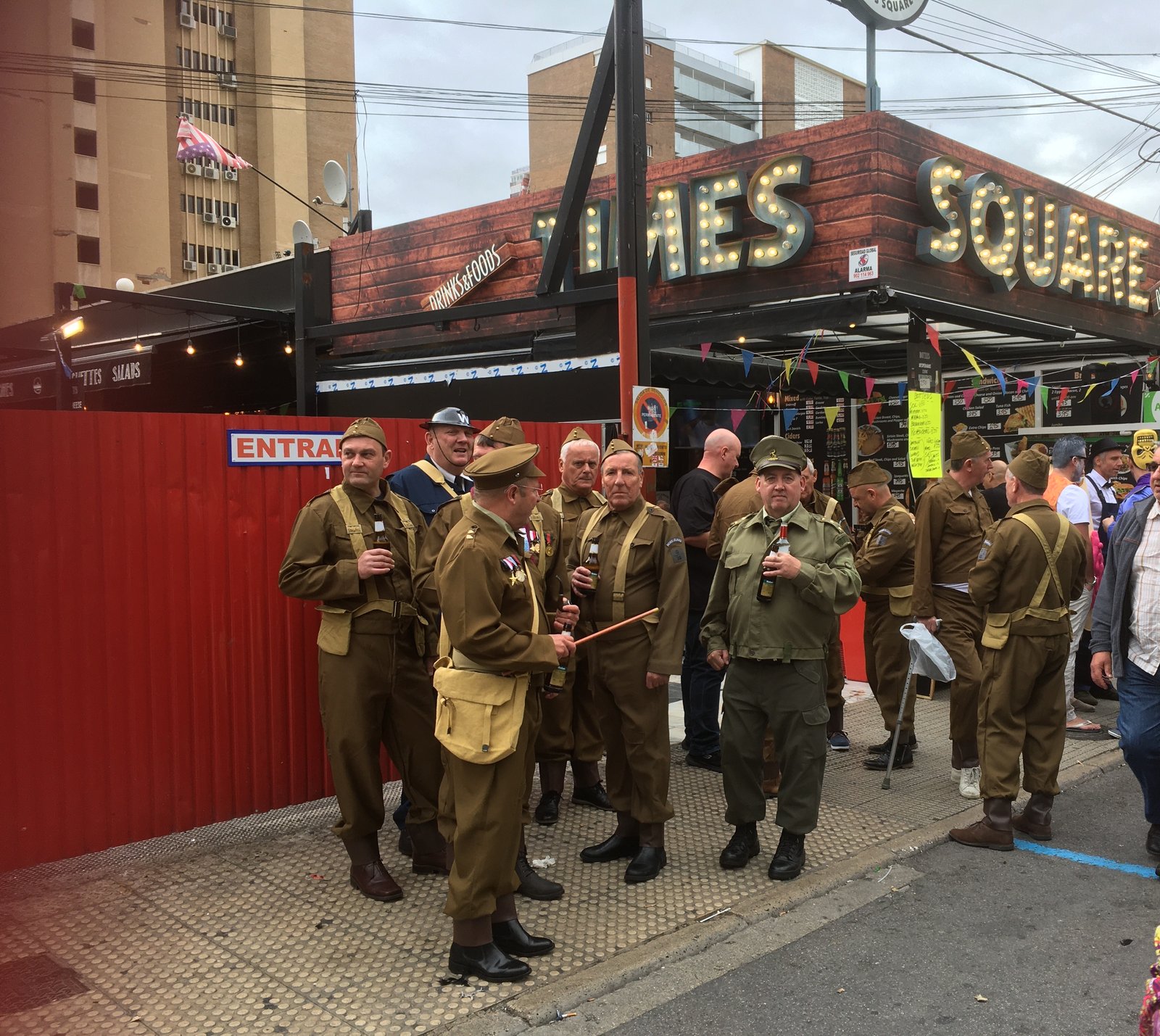
Fancy dress day falls on the Thursday after the Patronals finish, every year, and it is not in the council’s programme at all. It belongs to the British bars of the New Town, and from lunchtime the streets around them fill with people in costume until well into the night.By that pattern, 2026’s is Thursday 12 November. It is unofficial, so check the date with the bars nearer the time.
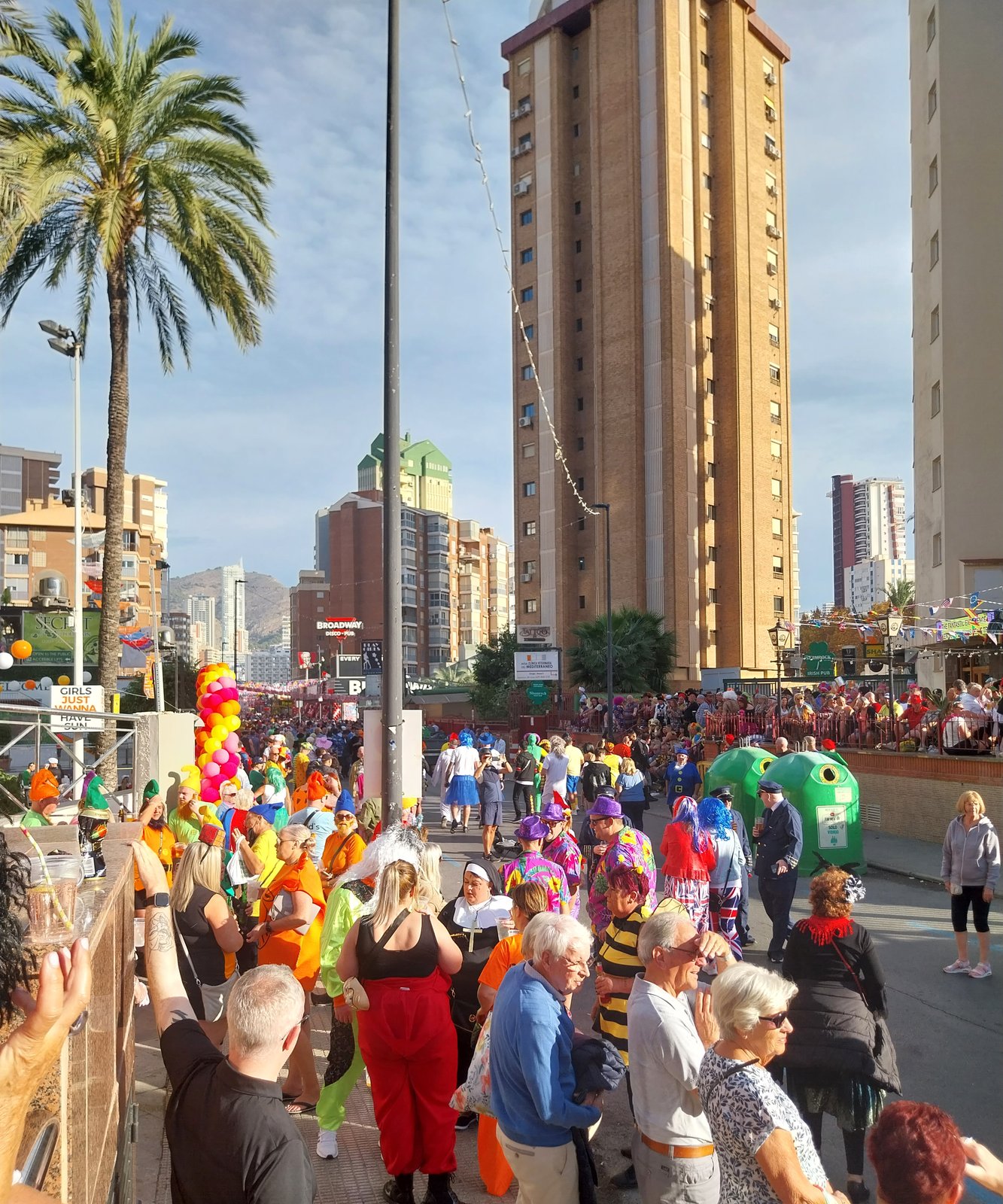
If you are coming for the fancy dress, arrive a day early. The float parade and the closing fireworks of the Patronals are on the Wednesday evening, and most people who come for the Thursday never know they missed them.
Practical notes
The events spread across the New Town, the church, Poniente beach and the fairground, so this is not an Old Town week in the way the summer is. The Old Town bars are where everyone ends up afterwards.
Book early if you want to be central. It is cheap by Benidorm standards but the town does fill, mostly with Spanish visitors from the surrounding towns.
Take a coat for the evenings. November days here are often shirtsleeves; the nights are not.
The rest of the year
The Patronals close the fiesta year. Six weeks earlier the town has Moros y Cristianos, and six weeks after it the Three Kings open the next one. The full year of Benidorm festivals has the lot, month by month, from the council’s own published dates.
The fancy dress photographs on this page were sent in by Bulletin readers Andrew and Janet. Thank you.